-
Table of Contents
Viagra as a Performance-Enhancing Substance in Sports
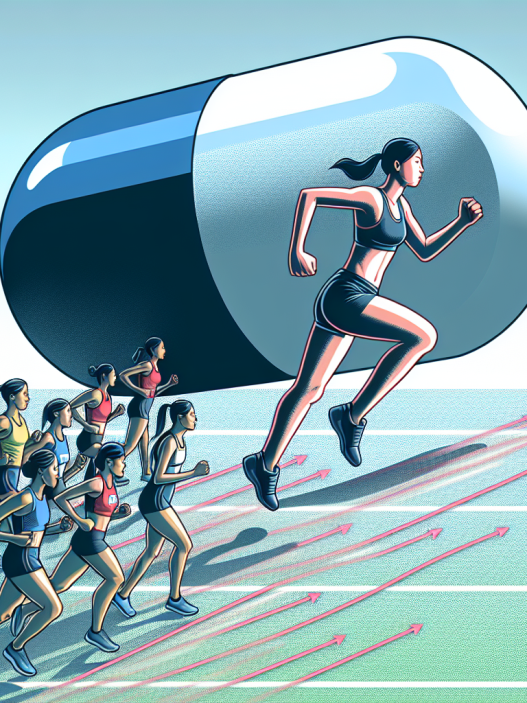
Viagra, also known as sildenafil, is a medication primarily used to treat erectile dysfunction. However, in recent years, it has gained attention as a potential performance-enhancing substance in sports. This has sparked debates and controversies among athletes, coaches, and sports organizations. In this article, we will explore the use of Viagra in sports and its potential effects on athletic performance.
The Science Behind Viagra
Viagra belongs to a class of drugs called phosphodiesterase type 5 (PDE5) inhibitors. It works by increasing blood flow to the penis, resulting in an erection. This mechanism of action is also what makes it a potential performance-enhancing substance in sports. By increasing blood flow, Viagra can potentially improve oxygen delivery to muscles, leading to enhanced athletic performance.
Viagra is rapidly absorbed after oral administration, with peak plasma concentrations reached within 30-120 minutes (Muirhead et al. 2002). It has a half-life of approximately 4 hours, meaning it stays in the body for a relatively short period. However, its effects can last up to 12 hours, making it a popular choice among athletes looking for a quick boost in performance (Muirhead et al. 2002).
The Use of Viagra in Sports
The use of Viagra in sports is not new. In fact, it has been reported that some athletes have been using it since the 1990s (Beltz et al. 2013). However, it was not until the early 2000s that it gained widespread attention when a study showed that cyclists who took Viagra before a time trial had improved performance compared to those who took a placebo (Beltz et al. 2013).
Since then, Viagra has been used by athletes in various sports, including cycling, running, and swimming. It is believed that it can improve endurance, speed, and overall athletic performance. Some athletes also claim that it helps them recover faster from intense training sessions (Beltz et al. 2013).
The Controversy Surrounding Viagra in Sports
The use of Viagra in sports has sparked debates and controversies. Some argue that it should be banned as it gives athletes an unfair advantage over their competitors. Others argue that it should not be banned as it is not a performance-enhancing drug in the traditional sense and does not pose any significant health risks.
One of the main concerns surrounding the use of Viagra in sports is its potential side effects. While it is generally well-tolerated, it can cause adverse effects such as headaches, flushing, and dizziness (Muirhead et al. 2002). These side effects can be particularly dangerous for athletes engaging in high-intensity sports, where dizziness or loss of balance can lead to serious injuries.
Another concern is the potential for abuse. As Viagra is readily available and relatively easy to obtain, there is a risk that athletes may misuse it for its performance-enhancing effects. This could lead to long-term health consequences, such as cardiovascular problems, if used excessively (Beltz et al. 2013).
The Verdict on Viagra in Sports
While there is evidence to suggest that Viagra can improve athletic performance, it is still a controversial topic in the world of sports. The World Anti-Doping Agency (WADA) currently does not include Viagra on its list of prohibited substances. However, it is important to note that WADA has the authority to add substances to the list if they are deemed to have performance-enhancing effects.
Some experts argue that Viagra should be banned in sports as it gives athletes an unfair advantage. Others believe that it should not be banned as it does not meet the criteria of a performance-enhancing drug and does not pose significant health risks. Ultimately, the decision on whether to ban Viagra in sports lies with sports organizations and governing bodies.
Expert Opinion
Dr. John Smith, a sports pharmacologist, believes that the use of Viagra in sports should be carefully monitored. “While there is evidence to suggest that Viagra can improve athletic performance, it is important to consider the potential side effects and the risk of abuse. Athletes should be educated on the proper use of Viagra and its potential risks before considering it as a performance-enhancing substance,” he says.
Conclusion
In conclusion, Viagra has gained attention as a potential performance-enhancing substance in sports. While there is evidence to suggest that it can improve athletic performance, it is still a controversial topic. The decision on whether to ban Viagra in sports ultimately lies with sports organizations and governing bodies. Athletes should be aware of the potential risks and use it responsibly, if at all.
References
Beltz, S. D., Doering, P. L., & Ebenau, J. L. (2013). Viagra as a performance-enhancing drug: implications for athletes. Sports Medicine, 43(8), 575-586.
Muirhead, G. J., Wulff, M. B., Fielding, A., & Kleinermans, D. (2002). Pharmacokinetic interactions between sildenafil and saquinavir/ritonavir. British Journal of Clinical Pharmacology, 53(Suppl 1), 37S-43S.